
Diabetes and erectile dysfunction: when might a penile implant be discussed?
Dr. Maher Moazin’s medical library · More than 21 years of local and international experience
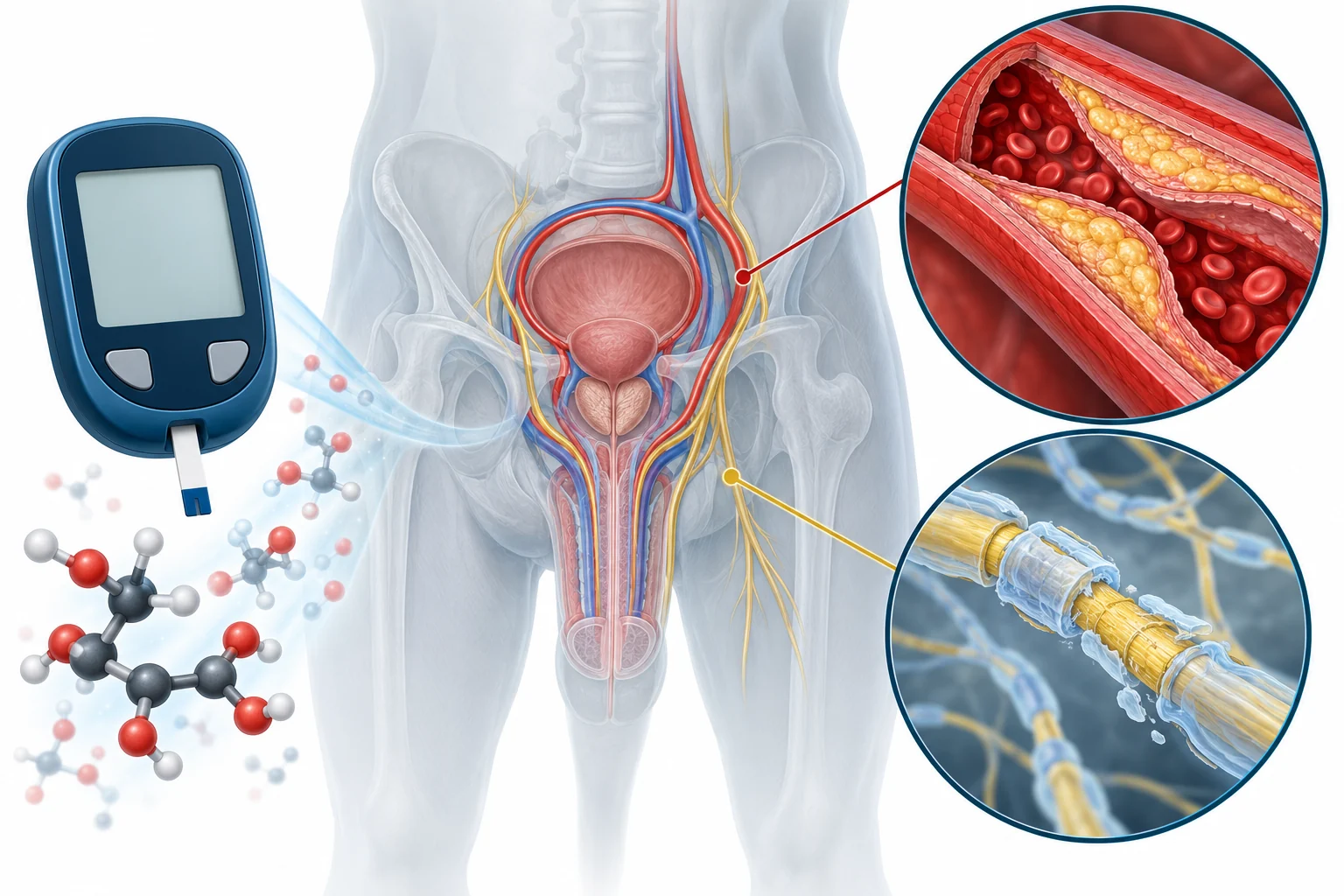
A man with diabetes may become concerned when erection difficulties recur, especially after a treatment has not produced the response he expected. It is easy to move from “Why is this happening?” to “Do I need an implant?” before an assessment has connected the symptoms with health, medication and previous treatment.
Diabetes does not automatically mean surgery is needed. One unsuccessful treatment attempt is not enough to select an operation. Assessment and discussion of alternatives come first; an implant is considered when it fits an informed medical decision.
This guide addresses diabetes-specific questions. For general doctor-selection considerations, explore penile implant surgery in Saudi Arabia.
Why can diabetes affect erections?
NIDDK explains that diabetes may affect blood vessels, nerves, hormones and emotional health. High blood pressure, cholesterol, smoking and some medications may also contribute.
Not every sexual change is caused by glucose alone. Describe whether the difficulty concerns getting or maintaining an erection, whether desire or ejaculation has changed and whether symptoms are constant or vary with circumstances. These questions distinguish different problems rather than putting them all under one label.
Will better glucose management alone restore erections?
Good diabetes care matters for overall health and may help prevent or address factors involving nerves and circulation. It does not promise that an established difficulty will disappear after one improved reading.
If symptoms persist despite better glucose control, continue care and discuss sexual function as part of your overall assessment. Equally, temporary improvement in erections is not a reason to stop diabetes follow-up or change medication.
Bring current monitoring results and medication details. Ask how your diabetes clinician and andrology specialist can coordinate information rather than treating the two issues as unrelated files.
What happens during an initial erectile dysfunction assessment?
Diagnosis includes medical, sexual and psychological history, examination and selected tests when indicated. NIDDK’s erectile dysfunction guidance explains the importance of understanding causes before choosing treatment.
Prepare the duration and pattern of symptoms, associated conditions, treatments tried, previous surgery and other symptoms. You do not need medical terminology; a clear description is more useful than a label from an advertisement.
Bring prescribed medication names and doses, including heart and blood-pressure treatments, and disclose supplements or other products. Do not stop or alter medication to prepare for the appointment unless your treating team specifically instructs you.
Why discuss cardiovascular health too?
Erectile difficulties can overlap with vascular and other health factors. The American Diabetes Association’s comprehensive assessment guidance addresses sexual health in the broader diabetes review. Assessment is therefore more than selecting a medication or device.
Mention relevant heart assessments and any known kidney, nerve or eye complications. These questions do not by themselves mean surgery is either necessary or prohibited. They help the clinician understand the complete picture. Keep dated reports rather than relying only on “the tests were fine.”
If tablets have not worked, is an implant the immediate next step?
Not necessarily. The clinician reviews what was used, how it was taken, the response, suitability and associated health factors. Other options can include local injections or vacuum devices as well as surgery in appropriate circumstances.
Do not increase doses or combine products independently. Another person’s response cannot determine your treatment. Ask whether the previous trial adequately tested response, whether contributing causes need attention and which alternatives deserve discussion before surgery.
When might an implant be discussed for a man with diabetes?
An implant may be considered after reviewing options, response, suitability and informed preferences. Endotext describes penile prostheses among options for men with diabetes who do not benefit from or cannot tolerate medical management.
This is not an automatic recommendation following diagnosis. Understand the purpose and limits of the device and the implications of surgery and follow-up. The device supports rigidity; it does not treat diabetes or every form of sexual difficulty.
Read about implant types and options, then ask why this treatment is being discussed for your situation now, which alternatives exist and what outcomes are realistic.
Glucose preparation: why is one number not the whole answer?
Diabetes and its management matter when discussing infection risk and surgical preparation. The EAU guidance discusses diabetes as an infection risk factor and the limitations of evidence for a single ideal HbA1c threshold.
This article therefore gives no number that acts as self-clearance for surgery or an automatic reason to reject it. Your results, history, general health, facility protocol and proposed procedure guide the team’s requirements.
Ask which tests are needed and when, whether your diabetes clinician should be involved and how medication and fasting would be arranged if surgery is planned. Do not copy another patient’s insulin or tablet instructions.
Is one implant type best for everyone with diabetes?
No universal choice is made here. Type selection considers dexterity, use, previous surgery and preferences. Malleable and inflatable devices may both be discussed with an individual risk-management plan.
Explain any difficulty involving hand movement or sensation rather than assuming it is irrelevant. Ask how device operation and follow-up fit your daily circumstances, not only which brand is popular.
How can you prepare without unnecessary tests?
Collect existing diabetes results, medication details, associated-condition reports and previous erectile dysfunction treatments. Ask which documents the team needs instead of buying an unselected test package.
Write down your priorities: understanding an unsuccessful response, concern about surgery, travel or returning to work. These questions help structure the discussion without committing you to a treatment you have not understood.
Explore Dr. Maher Moazin’s more than 21 years of local and international experience and arrange an assessment within urology, andrology and male infertility care.
If surgery is chosen, what should you ask about follow-up?
Request written review, wound-care and diabetes-medication instructions and clinical contact arrangements. Establish what to monitor, when reviews occur and who coordinates between clinicians if needed.
Read the recovery guide for practical planning and the cost guide for quotation questions. These support preparation alongside your individual plan.
Frequently asked questions
Does every man with diabetes and erection difficulties need an implant?
No. Assessment establishes causes and suitable options, which may include different treatments before or instead of surgery.
Does a good HbA1c guarantee no infection?
No reading guarantees zero risk. Preparation involves overall health, infection assessment and the surgical plan as well as glucose results.
Does an implant treat low desire?
Its purpose is rigidity. Low desire, ejaculation changes and other difficulties need their own description and assessment.
Should I stop diabetes medication before an appointment or procedure?
Not independently. Obtain personal instructions from your treating team, especially when fasting or a procedure is involved.
How can I begin an assessment?
Book an appointment or enquire through WhatsApp about arrangements and reports. You do not need to choose a device first.
Begin by understanding the problem, not assuming surgery
Diabetes does not remove the possibility of discussing solutions for erectile dysfunction. It makes overall health, coordination and follow-up important parts of the decision. Bring your information and questions, understand the options and agree the next step with the specialist.