
Recovery after penile implant surgery: work, driving and intimacy
Dr. Maher Moazin’s medical library · More than 21 years of local and international experience
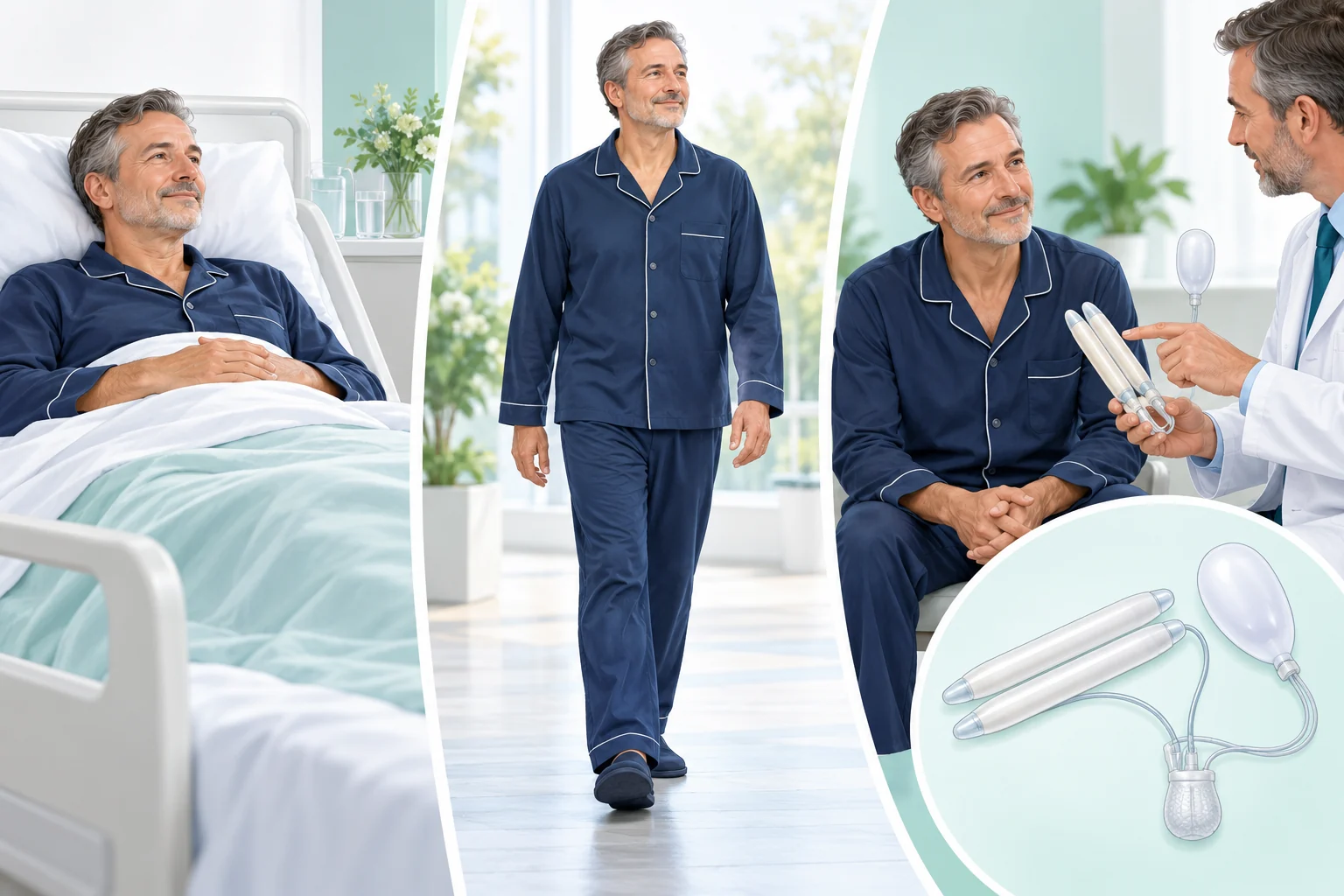
When can you return to work after penile implant surgery? What about driving, travel and operating the device? These questions matter because they affect everyday commitments, family life and privacy at work.
Recovery is not one date for every activity. Some daily tasks may become possible before physical exertion or device use is approved. The plan can vary with the implant, work demands, wound healing and your surgeon’s instructions.
This guide separates everyday activity, work, driving and intimacy and helps you prepare follow-up questions. Before deciding on treatment, explore the Saudi Arabia implant surgery and doctor-selection guide.
How long does recovery take?
Mayo Clinic describes a common timeframe of around four to six weeks for resuming strenuous activity and sex. This is general context, not automatic permission on a particular day. Your instructions, examination and follow-up determine what is appropriate.
Think in functional stages: early rest and care, increasing activity as instructed, and reviewing healing and learning device operation when permitted. Comparing your progress with another person is unreliable without knowing the procedure and their circumstances.
What information should you have before leaving hospital?
Request written medication, wound-care and activity instructions and the follow-up appointment. Know how to contact the clinical team, what to do outside normal hours and where to seek help for an urgent problem.
If a companion is helping, explain the practical arrangements without sharing details you prefer to keep private. Arrange suitable transport home rather than deciding independently to drive. Keep discharge papers, reports and medication details accessible.
If online advice seems to conflict with your instructions, ask the team to clarify. Combining several different protocols can create confusion rather than improve recovery.
What should you monitor during the first days?
Early discomfort, swelling and bruising may occur. Ask what is expected for your procedure, what should improve and which changes require contact. The important comparison is with the recovery pattern your surgeon explains, not photographs posted by other patients.
Take medication as prescribed. Do not add a treatment, increase a dose or change medication because it helped someone else. If the prescribed plan is not controlling pain, contact the team for advice.
Wound care: follow one clear plan
Dressing, washing and supportive-clothing instructions vary. UCLH patient guidance discusses hand hygiene, gentle wound care and avoiding rubbing or soaking until allowed. Ask which instructions apply to your operation.
Do not use antiseptics, creams or home remedies simply because they appear helpful. Before going home, ask when you may shower, whether the dressing stays in place, how to dry the area and how stitches will be reviewed. Clear answers to small questions reduce uncertainty.
When can you return to work?
Desk work differs from lifting, long-distance driving or prolonged standing. Describe a normal working day rather than only your job title. Recovery varies, so discuss leave and a gradual return before surgery instead of promising an employer a date based on someone else’s experience.
Ask about long periods sitting, travelling to work, carrying a bag and other daily tasks. Request any necessary leave documentation early. Being comfortable with a short task does not necessarily mean you are ready for a full working day.
When is driving appropriate?
You need adequate recovery, movement and vehicle control and must not be impaired by medication. Ask the surgeon for specific driving instructions and check any relevant insurer requirements. Some discharge protocols defer driving until follow-up, illustrating why a single timetable cannot apply to everyone.
Arrange transport to your first review and discuss long journeys separately. Absence of pain alone is not clearance to drive. Do not test your readiness on the road before the team has advised you.
When should you begin operating the implant?
Do not start inflation, deflation or bending because you have watched an explanation online. Timing and training depend on the device and healing. Mayo Clinic describes learning device operation commonly during the four-to-six-week period, with practice according to the care plan.
Ask the professional to demonstrate again if anything is unclear. General videos do not replace hands-on teaching, especially when they feature a different model. If you have difficulty after use is approved, ask for review rather than applying more force or changing the technique independently.
Returning to intimacy is more than reaching a date
Sexual activity is discussed after healing has been assessed and device use approved. Reaching a commonly quoted week does not remove the need to follow your surgeon’s advice. Comfort, communication with your spouse and clear expectations support a gradual return.
Ask what the surgeon will assess before clearance, whether additional training is needed and what to do if pain or difficulty occurs. Needing further explanation or practice is a reason to use follow-up, not a test of whether your decision has succeeded or failed.
Which symptoms need urgent contact?
Fever, increasing redness, wound discharge, persistent bleeding or pain not controlled by the prescribed plan require urgent medical contact. Inability to pass urine also needs prompt attention. ECU Health discharge guidance explains postoperative contact precautions.
For an urgent problem, do not wait for a marketing-message reply or a routine appointment. Use the emergency arrangements supplied by your clinical team. Seek emergency care if you cannot reach them or symptoms are severe, and take your operation report and medication list.
Travel and follow-up outside the treatment city
Before booking your return, clarify review dates, how long you may need to remain near the facility and suitable transport. Keep arrangements flexible where possible and identify someone who can assist if necessary.
Some questions may be discussed remotely, but messages or photographs cannot replace every examination. Establish which reviews need attendance and keep your reports. Read the cost and follow-up guide and, if relevant, the diabetes preparation guide.
Frequently asked questions about recovery
Does the end of pain mean sex is allowed?
No. Clearance depends on healing assessment and your surgeon’s instructions, not pain alone.
Can I learn pump use from a video?
A video can explain the concept, but begin only after approval and training for your device.
Can I work from home earlier?
Discuss hours, sitting, medication and comfort. Removing the commute does not automatically make a long working day suitable.
How do I arrange a consultation with Dr. Maher Moazin?
Explore his more than 21 years of local and international experience, then book an appointment or enquire through WhatsApp about assessment and follow-up.
Your recovery plan begins before surgery
Know what you will need at home, at work and when travelling, when reviews take place and how to obtain help. Discuss these questions during your penile implant consultation, keep the written instructions and link your return to activity to actual healing and follow-up.